Friday, August 27, 2021

Cyclist With Five Cows.


Sorry I haven’t written anything for a few days, I have been a bit busy with one thing and another. Also, I am quite lazy. I did actually do some real work on Tuesday. A couple I know asked me if I would polish their furniture for them, bookcases, chests of drawers, that sort of thing. I used to do antique furniture restoration for a living many years ago. I quite enjoyed it and they are very nice people. A lot of the time I was at their house involved sitting in the garden, drinking tea, and chatting. I enjoyed it so much that yesterday I even did some work on my own house. I repaired my front door, which was beginning to disintegrate at the bottom, and gave it a coat of varnish. I also stained the bench in my yard. It looks a lot better. There has been some sad news on the music scene recently. Firstly,
Nanci Griffith passed away aged only 68. I called one of my recent blogs From A Distance after one of her most famous songs, little realising that she was ill. Nanci was a great singer. I remember seeing her at Glastonbury in 1997. I always used to play her song On Grafton Street at Christmas time. Another great singer was Don Everly who died aged 84. I listened to my only Everly Brothers album on Sunday, Everly Brothers In Concert which was recorded at the Royal Albert Hall in 1983. Another legend who has passed away is Charlie Watts. He was a great drummer, perfect for The Stones and a wonderful person with a dry sense of humour. It is hard to imagine The Stones without Charlie. 


I finished reading Lunch Poems by Frank O’Hara about a week ago and I wrote some notes meaning to write a review, but it was so long ago now, I can’t make much sense of my notes. I wrote down words like aphorisms, nourastinia, insouciance, naphtha, au courant, and metier, but I can’t remember why. I was probably trying to show off by using posh words or jotted them down meaning to find out what they meant. I did enjoy the poems though. The book was published in 1964, but the poems still sound fresh today. You can almost date the day he wrote them because they read like diary entries and he mentions events that were happening, such as Khrushchev visiting New York, Lana Turner has collapsed, or Billie Holiday dying. It was very educational reading the poems. In one poem called In Alma he mentions Judas Priest. I always thought that name was invented by Bob Dylan on his John Wesley Harding album. This made me think that Bob stole the name from Frank after reading Lunch Poems. However, when I looked it up, I discovered that Judas Priest is a well-known American expression, and it appears in a book by Sinclair Lewis called Babbitt published in 1922. 


August is a Wiki month because I also had to look up Norman Bluhm, Mal Waldron, Adolph Deutsch, Helmut Dantyne, Bill Berkson, Mary Destri, Vincent Warren, Fanny Elsser and other names that litter the poems because O’Hara was such a name dropper. Northern Pursuit is a 1943 film starring Errol Flynn. Cyclist With Five Cows turned out to be a painting by Jean Dubuffett. I must say some of the humour in the poems did remind of Bob Dylan and his book Tarantula. Lunch Poems was published by City Lights which is why I bought it when I saw it on eBay for only £2.00. I thought it might be a bit like Lawrence Ferlinghetti, Corso, or Ginsberg. Although Frank O’Hara was loosely associated with these people, he isn’t really a Beat writer, he had his own witty unique voice, and it is a shame he died in a freak accident in 1966 aged only 40. I think that has cleared my backlog of things I wanted to tell you about. I got a new CD a couple of days ago which is a lost psychedelic classic from 1967. I’ll tell you all about it this weekend hopefully. 
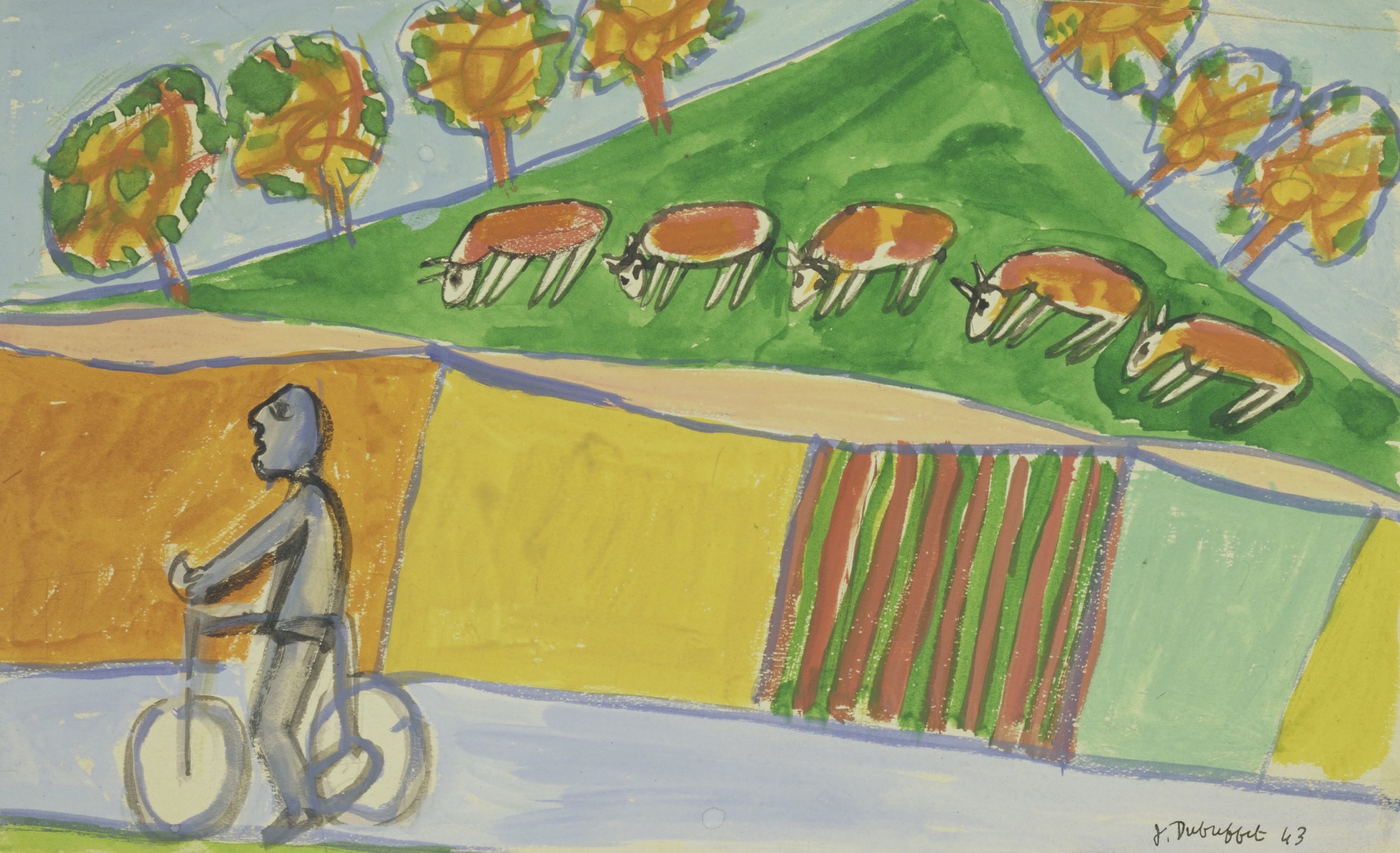
Cyclist With Five Cows.


Sunday, August 22, 2021

The Guardians.


Sunday morning, the sun is trying to shine,
Anne Briggs is singing in my kitchen, and I have just made a cup of tea. All seems well, as long as I don’t think about the news from Afghanistan which is awful. I haven’t been up for long because I was watching a film last night until 2.00 in the morning. I stumbled across it on BBC4 when I was flicking around the channels for something to watch. It was a French film called The Guardians made in 2017 starring Nathalie Baye and Iris Bry. It is set during World War 1 on a farm in the Limousin region of France. The men have gone off to fight, get killed, injured, or go mad in the war and the women are left to do the arduous work on the farm. The farm owner Hortense hires an orphan girl Francine to help her on the farm. The story develops very slowly. All goes well at first, but tensions develop. What I particularly liked about the film was the beautiful cinematography and the attention to detail. It was almost like a painting by a French landscape artist. They used authentic farm tools of the period, and one could feel how tedious and back breaking the work must have been. Slowly, you can see how the lack of workers for farming during the period helped the development of farm machinery and the pleasure the women felt as combine harvesters and tractors were introduced. The acting of the two main characters was excellent. I read that Iris Bry had never acted before and was only discovered by chance by the casting director. That fact makes her performance all the more remarkable. I think some people might find the film too slow, but I enjoyed it. 

Iris Bry.

Apart from that, I didn’t do much else yesterday. I had to go to the Post Office because I sold two books, the
Monty Don and the Ian Rankin, so it was good to get them off my land. I finished reading Lunch Poems by Frank O’Hara. I might tell you about that tomorrow when I have made some notes. I spent some time just staring out of the kitchen window. A family of starlings have moved in. I like watching them and the sparrows flying around. They go around in gangs. It is like the collective unconscious. I have seen some amazing films of starlings in a murmuration, but I haven’t got enough for one of those!. Anyway, I can’t think of anything else to tell you now. Enjoy Sunday.

Starlings Murmuration.


Thursday, August 19, 2021

Visiting Laurie Lee In Slad.

Rosebank Cottage.

Following our expedition to see George Orwell’s grave recently, one evening in the pub I suggested to my neighbour that it might be interesting to visit the village of
Slad in The Cotswolds which was the home of the author Laurie Lee. There is actually a link between the two writers because they both fought in the Spanish Civil War and wrote famous books about their experiences. It is only about 44 miles from Westbury to Slad, so we set off yesterday morning at about 11.00. The journey was quite uneventful to begin with. We went via Trowbridge and Bradford-On-Avon. Before Bath we headed north, across the M4 and up the A46 through some scenic countryside and interesting villages and towns. 

Laurie Lee's Grave.

One small village had the unusual name of
Petty France. I googled it this morning and found that it got the name because of the number of Huguenot refugees who once lived here. There is also a village called Dunkirk for the same reason. The town of Nailsworth looked very attractive, if somewhat hilly. All went well until we reached the town of Stroud where we got completely lost trying to find the road to Slad. We ended up doing a detour of several miles until we stopped and asked a passer-by who put us on the right road. Finally, we arrived in the picturesque village of Slad nestling in the Slad Valley.  Parking spaces were at a premium, so we had to drive through the village and park in a kind of lay-by and walk back. Almost the first place I noticed was Rosebank Cottage which is immortalised in Laurie Lee’s classic memoir Cider With Rosie. He arrived here with his six brothers and sisters in 1917 aged three. In the book he says, “I was set down from a carrier’s cart at the age of three; and there with a sense of terror and bewilderment my life in the village began”. 


He related how the cellar would flood during heavy rainfall and they would have to clear the storm drain. Seeing the house in reality, you can understand that because it is situated down a steep incline from the road. I took a couple of photos of the cottage, and we moved on. On the right side of the road is the small Holy Trinity Church where we easily found Laurie Lee’s resting place just by the pathway. The headstone simply reads, ‘He Lies In The Valley He Loved’. On the reverse side of the headstone is a verse from his poem April Rise, ‘If ever I saw blessing in the air, I see it now this still early day, Where lemon-green the vaporous morning drips, Wet sunlight on the powder of my eye’. 

In The Woolpack.

It was all very interesting, but unlike other famous graves I have visited, I was beginning to realise that this whole village is a memorial to
Laurie Lee. Right next to the church is the School House which Laurie attended until the age of twelve. He also wrote vivid descriptions of that experience. Straight across the road from the school is the Woolpack Pub. It was busy with tourists and walkers who were on the Laurie Lee Wildlife Walk. It is a five-mile circular walk around the Slad Valley and is marked at certain points by Poetry Posts which have appropriate verses on them. There is one right outside the pub. The sun had emerged by now and it was quite warm, so we sat at a table outside and admired the wonderful view. I would have loved a pint of cider in honour of Cider With Rosie, but knowing we had an hours drive ahead I thought it would be more sensible to just have a glass of wine. 

Books by Laurie Lee.

Laurie Lee and his wife moved back to Slad in the 1960s after over 30 years away. He could often be found holding court in the bar here. He once recounted how there were occasions when people would ask him in the pub if he knew where Laurie Lee was buried!, not realising he was still alive and they were talking to the great man himself. I had a little tour of the pub’s interior, and it is quite fascinating. There is a bookcase containing lots of rare editions of his books. There are photos and paintings of himself. I particularly liked a large, framed poster of the cover of my favourite book by him called  
As I Walked Out One Mid-Summer's Morning. It is the second book of his memoir trilogy. It tells the story of when he left Slad, and his experiences in Southampton and London and then walking all the way through France & Spain, surviving by busking with his violin. One of the places he stayed in is Tarifa which I remember from our journey to Morocco back in 74. In Almuñécar, Andalusia there is actually a memorial to Laurie Lee. He was finally evacuated by a British destroyer as the Spanish Civil War got underway. 

When I was young, that book inspired me to want to go travelling almost as much as On The Road by Jack Kerouac. The third part of the trilogy called A Moment Of War is about Lee’s return to Spain in 1937 to fight against Franco. I haven’t read that one though. Anyway, after a most enjoyable visit to Slad we headed homeward. Thankfully, finding our way out of Stroud was a lot easier on the return journey. When we got home, I went to the pub at 5.00 and ended up drinking five pints of cider in honour of the great Laurie Lee.


Thursday, August 12, 2021

From A Distance.


It was quite a nice afternoon yesterday, so I went for a bit of a walk. I headed up this lane known locally as
Snappersnipes. I have tried to find out where that name came from but haven’t found a good explanation. That led to a road called The Butts. I know some people might find that name amusing as well, but I know where the name comes from. In the olden medieval days, it was compulsory for all men in a town to practice archery. That was why the English won such battles as the battle of Crecy in 1346 when the English army were firing 6.000 arrows a minute. The area of a town set aside for archery was called The Butts. Anyway, I walked along there to Newtown and headed towards the White Horse. By the time I got to the top of Newtown I was knackered and hot. I sat on a bench and surveyed the view of the White Horse from a distance. 


This man with a friendly greyhound came along and we had a bit of a chat. After he had walked on, I realised that he was the first person I had spoken to since last Saturday. I walked on a bit further as far as the Equestrian Centre and took a photo of some horses and then turned back. My original plan was to walk through the woods and come out at Chalford, but I knew the path would be boggy after all the recent rain. That is my excuse for not walking further anyway. I’ll try and have a longer walk next time. This morning I put another book for sale on eBay. The House Without Windows by Barbara Newhall Follett signed by the illustrator Jackie Morris. 


I only bought it about a year ago. It is a children’s book, not really my thing, but I was fascinated by the authors life, and her mysterious disappearance. That is my news for today. I have to go to the post office in a minute and I might go for another walk later if the sky brightens up a bit. 


Tuesday, August 10, 2021

Tuesday Morning Beat.


It has been a nice sunny Tuesday morning. I was up good and early today because I didn’t go to the pub yesterday. I always seem to be up and about early when I avoid the pub. I put another book for sale on eBay called Even Dogs In The Wild by Ian Rankin. It is a signed copy as well. Crime fiction isn’t really my thing, but I like Ian Rankin as a person though because he is a big Van Morrison fan. I saw him once in London when he chaired a discussion with Van at a concert to launch Van’s Lit Up Inside book of lyrics. That was a great night, I can’t believe seven years have almost gone by since then. While I was busy doing that, there was a knock on the door, and it was the nice post lady who handed me a package which contained a magazine called Beat Scene. I haven’t bought this magazine before although it has been going since the 1980s. I used to buy books a long time ago from the guy who has published the magazine as a labour of love since it started. His name is Kevin Ring. I think I met Kevin once at a Beat event in Plymouth in 87. I have just spent the last hour reading it and I am very impressed with the quality of the intelligent well written articles, the photographs, and the layout of the magazine. The magazine concentrates on the American Beat writers and others associated with them. If you like the Beat Generation or Charles Bukowski or John Fante and similar writers, then I think you would enjoy this magazine. I think you will find it quite easily if you google Beat Scene. I must say I much prefer a real book in my hand or a magazine to reading everything on the internet or Kindle. I was given a Kindle once as a present and I only used it once. Give me a proper book any day. 


What else have I done since yesterday? Hmm, the rain was torrential yesterday afternoon, so I passed the time listening to a talk by Eckhart Tolle called Awakening The Essence Identity. It lasted two hours, but I found it fascinating. To me, Eckhart is giving much the same message as Krishnamurti, but in a much more understandable way. I find it much easier to grasp what he is talking about. Anyway, I can’t sit here all afternoon, there is more to life than the internet. I’m going to get dressed and go for a walk. I need to go to the shops anyway, because my fridge appears to have eaten all my food and then wet itself. See you later.


I found this humorous drawing of Eckhart Tolle on the internet somewhere. I hope whoever drew it doesn't mind me sharing it. 

Friday, August 06, 2021

Visiting George Orwell In Sutton Courtenay.

George Orwell's Grave.
The original plan for yesterday was to go to Winchester to see Jane Austen’s grave and other places of historical interest. I changed my mind at the last minute though because I thought Winchester might be too touristy at this time of year. Also, the weather forecast wasn’t great, and I didn’t fancy plodding around the streets of Winchester in the rain. Jane can wait for another day. Instead, I thought it would be better to go and see the grave of another author who I admire, namely George Orwell. I think he was one of the greatest and most influential writers of the 20th century. I have read several of his books, including Animal Farm, Nineteen-Eighty-Four, Homage To Catalonia, Down And Out In Paris And London, and Keep The Aspidistra Flying. 

David Astor.
It didn’t take that long to get to the village of Sutton Courtenay in Oxfordshire. We went via Devizes, Avebury, Marlborough, Hungerford, Newbury, and Didcot. It was a bit tricky finding the right road out of Didcot and when we arrived in the village, we found the road was closed. It looked like they were putting in a new drain or something. We had to do a long detour and approach the village from the other side. Finally, after asking about three people for directions we arrived at the picturesque churchyard of All Saints Church. It was quite a large churchyard with hundreds of gravestones, and we didn’t have a clue where to start looking. I spotted a lady who must be a church volunteer, she was doing some topiary on a tree.

All Saint's Church.
 “Excuse me, we are looking for the grave of George Orwell, do you know where it is please?”. “Yes”, she cheerily replied, “Go right down to the end and you will find it three rows back, it has a red rose on it, the grave has his real name on it which is Eric Blair”. “Yes, I knew that, thank you very much”. It was beginning to drizzle rain quite steadily now, and despite the ladies’ instructions we still couldn’t find the grave. I was getting fed up and a bit damp. Luckily, we met a couple of people who were also looking for the grave, and between the four of we finally found it. As you would expect with a democratic socialist like George Orwell the grave is very simple, it just says, ’Here lies Eric Arthur Blair, Born June 25th, 1903, Died January 21st, 1950’.  That is it, plain and simple, no bragging about his achievements or quotes from his books or anything. A friend of mine who knew I was coming here said I should leave some little plastic pigs, horses, sheep, and cows on the grave to create a miniature Animal Farm, but I didn’t have any, and that would have been very disrespectful. 

Asquith's Grave.
Nearby, I spotted the memorial stone of another great man who was Orwell’s friend David Astor. He was at one time the owner and editor of The Observer newspaper and the son of Nancy Astor the first woman to take her seat in the House Of Commons. Despite being a multi-millionaire, he lived very simply and was a great philanthropist and civil rights campaigner and friend of Nelson Mandela.  It was Orwell’s wish to be buried in a simple English churchyard and it was his friend David Astor who arranged for Orwell’s burial in this quiet spot. Astor’s stone  is just as simple as you would expect.  It was placed here by Astor's wife Bridget. David Astor's ashes were actually scattered in the grounds of his home Sutton Courtenay Manor. We also came across the grave of Herbert Asquith who was British Prime Minister from 1908-1916. He was the man who took this country into World War 1 in 1914 but had to resign two years later. His grave is much more flamboyant, more like a tomb, with lots of inscription on it. I much prefer the simplicity of Orwell and Astor. 

Inside The Church.
Inside the church we also found a wall memorial to George Orwell. I think it was put there by the Orwell Society. There is also a cabinet with lots of information about him. As we left the churchyard, I said cheerio to the nice topiary lady. “Thank you very much, we found it ok, mission accomplished. I expect you get a lot of people looking for George Orwell’s grave”. “Oh yes,” she replied, “I think you are the fifth people to ask today”. I think that is great, 71 years after he died people are still interested in George Orwell. I think the reason is partly because the subjects that he wrote about are still relevant today, especially such books as Animal Farm, 1984 and Homage To Catalonia where he warned about the dangers of totalitarianism and fascism. Expressions that Orwell used, such as in 1984 Big Brother. Thought Police, Room 101, memory hole, Newspeak, doublethink, and thoughtcrime, or in Animal Farm, ‘All creatures are born equal, but some are more equal than others’ have become part of the language. Many things he warned against have come true, you only have to look at China, North Korea, Myanmar, Belarus or many other places to see that. Another thing that I like about Orwell is that he practiced what he preached, such as when he went to The Spanish Civil War to try and help stem the rising fascist tide. He almost died when he was shot in the throat by a sniper during the battle for Barcelona.

I better stop now before this post turns into a political rant. After that we went to nearby Abingdon where we sat in the van and ate fish & chips while looking at the rain. Then drove home slowly as we kept getting stuck behind tractors and their wisps of hay and got back to The Crown for a well-deserved drink. I’m pleased we made the effort to go and visit the great George Orwell whose work is as important today as it ever was.
Postscript: I am very grateful to a native of Sutton Courtenay Arthur Hutt for providing me with extra information about George Orwell & David Astor. Much appreciated.


Popular Posts