Friday, August 05, 2022

Listening To Little Walter.


A new CD arrived here a couple of days ago called The Best Of Little Walter. It was Little Walter’s first album and was originally released in 1958, a collection of ten tracks that were hits on the American R & B charts in the 1950s plus two B-Sides. Rolling Stone magazine placed this record at number 198 on its list of the 500 greatest albums ever made. I think Rolling Stone might have placed it that high because of a guilty conscience, due to the fact that most white Americans ignored blues music until it was sold back to them by British blues bands in the 1960s. I have played it four times now and it grows on me with every listen.


As is often the case with me discovering new music, it was Van Morrison who pointed me in the direction of Little Walter. I remember many years ago reading an interview with Van where he recounted a story about meeting Little Walter in London in 1964. Van’s band Them had just arrived in London, and Walter was on his first trip to Europe. They were all staying at the Aaland Hotel in London. In return for Van buying Walter some Chinese food he taught Van some of his harmonica techniques. I was reminded of all this five years ago when Van recorded Walter’s song Mean Old World on his Roll With The Punches album. If (like me until a few days ago) you don’t know a lot about Little Walter, I’ll just tell you a little about him that I learned from Wikipedia. 
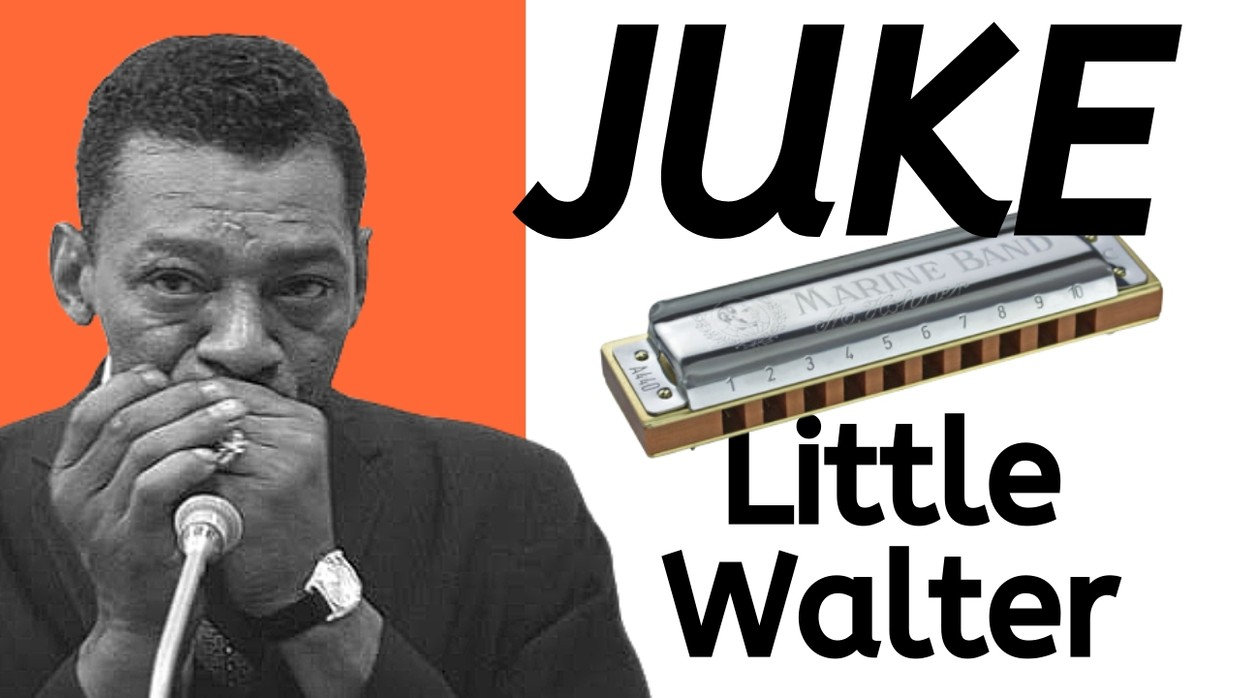

He was born Marion Walter Jacobs on May 1, 1930, in Louisiana. He was a blues musician, singer, and songwriter, whose revolutionary approach to the harmonica had a strong impact on succeeding generations. His virtuosity and musical innovations fundamentally altered many listeners' expectations of what was possible on blues harmonica. He was inducted into The Rock and Roll Hall of Fame in 2008, the first and, to date, only artist to be inducted specifically as a harmonica player. He arrived in Chicago in 1946 and joined Muddy Waters band in 1948. He left Muddy Waters in 1952 for his own career, but still appeared on most Muddy Waters records during the 1950s. 


His found fame recording as a solo artist with the instrumental Juke in 1952 which reached number 1 on the R & B charts. Walter was an alcoholic with a nasty temper which often led to fights and minor run ins with the law. In February 1968 he was involved in a fight while playing at a night club in Chicago and died the following morning. He was buried in an unmarked grave, until some fans had a marker designed and installed in 1991. 
So, to the album. The black and white photo on the cover shows Walter playing a Hohner 64 chromatic harmonica. The first track My Babe was written by Willie Dixon who also played bass and produced this album. I first heard of Willie Dixon in 1964 as the writer of Little Red Rooster by The Stones. Sad Hours is a slow instrumental with guitar and wailing harmonica. You’re So Fine is an upbeat R & B number typical of the music that inspired young bands of the 60s. Last Night is soulful by comparison. The great American writer and social commentator Studs Terkel said, ‘Perhaps, the essence of Little Walter comes through most clearly in the slow blues, “Last Night.” There is a moaning and a crying and a shouting here that makes it plain, this man’s harp is his voice – much like Armstrong’s trumpet speaks for him . . . Little Walter and his harmonica are of one piece’.

Blues With A Feeling
was originally written by Rabon Tarrant, but Walter rewrote it and claimed it as his own. It is now regarded as a blues standard which has inspired many musicians to play the harmonica. Can’t Hold Out Much Longer features Muddy Waters on guitar. Juke is a very catchy and probably Walter’s signature tune I would imagine. I wonder if this is the tune he taught Van to play? Mean Old World which I mentioned earlier is next, and I have shared a video below of Walter playing this song live with Hound Dog Taylor if you want to see it. It was originally recorded by T Bone Walker, another song that Walter took for himself. Off The Wall is another great instrumental displaying Walter’s virtuosity. You Better Watch Yourself sounds quite threatening, which might hint at Walter’s dark side. One of my favourite tracks is Blue Lights, a very atmospheric instrumental. The album ends with the upbeat Tell Me Mama. I have enjoyed getting into this album the last two days. I’m not an expert on blues music at all, so it has been quite educational for me listening to and learning about the great Little Walter.

Muddy Waters, Lttle Walter & Bo Diddly.

Little Walter: Mean Old World (Live)

Thursday, July 28, 2022

Calcutta: Stories from the Streets.


I have met some very interesting people working on the recycling crew at Glastonbury. I met Bob and his wife Paula a few years ago, and like me they keep returning year after year. At this year’s festival as we were chatting, Bob mentioned that he had written a book about his time in Calcutta. I said that I would like to read it and Bob kindly sent me a copy which arrived a few days ago. It is called
Calcutta: Stories from the Street. It is a slim volume of ten short stories, so it didn’t take me long to read it. It is also illustrated by Bob himself with charming drawings of Calcutta street scenes. Bob has travelled extensively throughout India many times over the past 40 years, but Calcutta seems to be his favourite place in the sub-continent. It isn’t a place that most people would think of as an exotic travel destination, but among the crumbling post-colonial architecture, the crowded narrow lanes and the street sleepers is where Bob felt most alive in India. In the stories he paints a vivid picture of the chai wallahs (tea sellers), beggars, hustlers and katcherawallahs (rag pickers) that he met and befriended. There is Raju who sold char on Sudder Street, Ram the newspaper seller, Shanti the alcoholic hustler, Apool the flute maker and many more. 


I don’t suppose I will ever get to go to Calcutta but reading Bob’s little book certainly gave me a sense of the place and the people struggling to survive in it’s labyrinth of crowded streets. I thoroughly enjoyed reading it. Bob wrote the book to raise some money for a charity called Calcutta Rescue which provides medical help for the street people, and support to enable their children to go to school. I’m not sure if the book is still available, maybe it was a limited edition because I couldn’t find a link to buy the book online. However, you can find out more about the charity here- https://calcuttarescue.org/ 

Wednesday, July 20, 2022

Stone In A Landslide by Maria Barbal


It is Wednesday morning. Only 22 degrees C at the moment, which is much more like we are used to in this country, and there is a 30% chance of rain showers today, which will be welcomed, especially by the plants in my wee garden. I had a friend visit me last week who gave me a book as a present. I read it last night in one sitting, so I just thought I would tell you about it while it is still fresh in my mind. It is called Stone In A Landslide by Maria Barbal. It is a novella of only 126 pages which is why I was able to read it so quickly. The book was the authors first work of fiction and was originally published in Catalonia in 1985. This English translation was published in 2010 by the Peirene Press who specialise in translations of contemporary European literature. The translator is from Ireland and called Laura McGloughlin.

Maria Barbal.

The story is told through the eyes of an old lady called Conxa who is living in Barcelona and looking back at her life in a small mountain village in the Pyrenees in the early part of the 20th century. She was the fifth of six children. The family was so poor that at the age of thirteen she is sent to live with a childless aunt called Tia and her husband who Conxa just calls Oncle. Thus begins a life of unrelenting hard work. Eventually she meets Jaume who is a builder, and the happiest time of her life begins. Tia initially doesn’t want her to get married, but eventually relents when she can see advantages to it. They have two daughters Elvira and Angeleta and finally a son Mateu. Her husband is often absent due to work, and he becomes involved in republican politics. Their lives are shattered with the outbreak of the Spanish Civil War when Jaume is taken away, never to be seen again. Conxa and her daughters are also taken away and incarcerated for a while, but eventually allowed to return to their home. The children grow up, marry and Conxa becomes a grandmother. The children all leave and finally Conxa does as well. It is when in Barcelona that she realises how much her previous life in the village of Pallares meant to her. That is why she can recall the sights and smells so vividly. When a person leaves their home of nearly a lifetime, the memory becomes an art form.


The story is told in a very simple sparse way in the language of a person of limited education. It is the story of someone who accepts their role in life without judgement. Conxa lived through one of the great events of the 20th century but took no interest until it devasted her life. There is no political comment apart from her noticing Monsignor Miquel’s sermons from the pulpit were not about the bible, but about republicanism being a disaster, and people should accept their lot in life and stop complaining. Although it is not a feminist book, there are some wry observations that the men make most of the decisions, but women do most of the work. Maria Barbal was born in 1949, so could not have witnessed these events for herself, but I noticed that the book is dedicated to her parents. I suspect that it was by listening to her parents that she learned what life was like during this tumultuous period in history. I enjoyed this book immensely. It is a message that whatever oppression is inflicted on people, they still have the courage to carry on. I suspect that in the villages of Ukraine today there are people just like Conxa.


Monday, July 18, 2022

The Eternal Rocks Beneath by Katherine Priddy.


Phew, it is too hot to be outdoors today, so I have stayed in the cool of my living room. I have been listening to a CD called The Eternal Rocks Beneath which is the debut album by Katherine Priddy. I bought it from Katherine herself after her performance on the Acoustic Stage at Glastonbury a few weeks ago. It is a most enjoyable album indeed. Katherine has a beautiful voice, writes wonderful songs, and is an excellent guitar player. The opening song is called Indigo. It begins with the sound of a blackbird singing in a tree before Katherine’s deft acoustic guitar picking joins in. The lyrics tell the story of a child playing in a favourite beech tree, until one dark night the tree is felled in a storm. I suppose it is a song of lost innocence. The production on this song and the whole album by Simon Weaver is first class with the multi-layered voice harmonising with itself. 


The lyrics of Wolf read like some Victorian gothic novel where a person is repelled by and attracted to a dangerous character. I love the cello and relentless drum sound. About Rosie is a sad song concerning someone in a bad relationship who lets other people decide their worth, rather then deciding their own destiny. Katherine is obviously very well read because two of the songs are inspired by the Greek Myths. I can relate to that as well, because when I was a kid, I used to get a weekly magazine called Finding Out which serialised all the stories from ancient Greece. The first song is called Icarus and is about a self-destructive person heading for a sticky end. This song has fabulous violin playing by Zofia Reeves, viola by Alice Brown and cello by Bart Shirm. 

Katherine Priddy at Glastonbury

The other Greek Myths inspired song is Eurydice which I thought was her best song at Glasto. As you probably know Eurydice was the nymph wife of the musician Orpheus who went into the underworld to rescue her and bring her back to the world of the living. The production on this song can only be described as lush. Letters From A Travelling Man by contrast is a lively upbeat folkie type song which I think was released as a single. Katherine sang this song for the BBC while at Glastonbury, and I have shared it below if you want to see it. The lines about buying some land and a baby on the lawn reminded me slightly of lyrics in Beeswing by Richard Thompson. He has spoken very highly of Katherine, and she has supported Richard on tour. I think he might be a big influence on her. 

Katherine Priddy @ Glasto.

The Spring Never Came
is a beautiful sad tale of lost love. Ring O’Roses is obviously inspired by the children’s nursery rhyme of the same name. It was originally about the Black Death in the Middle Ages but might have taken on a new meaning since the Covid pandemic. I don’t think that was Katherine’s intention though and she probably wrote the song before Covid. From listening to the lyrics, I think it is an anti-war song. The music is perfection and the shimmering cymbals and percussion remind me of Reynardine on Fairport Convention’s Liege & Leif album. The Isle Of Eigg is a small island in The Hebrides of Scotland. Arisaig is also mentioned in the lyrics, which is where you can catch a ferry to Eigg. Katherine’s song is inspired by a trip to Eigg where a lot of drinking went on by the sound of it. You can see her sense of humour in the lyrics, such as Eigg, you have cracked it. 


The album ends with The Summer Has Flown which is an achingly beautiful lament for the end of summer. This excellent album concludes, as it began with the sound of a blackbird which I think is one of the nicest sounds in nature. I highly recommend this album and I look forward to hearing more music by the wonderful Katherine Priddy.


Katherine Priddy - Letters From a Travelling Man (Glastonbury 2022)

Sunday, July 03, 2022

My Glastonbury 2022 Story, Part 1, Return To Avalon

My Little Tent.

The big day had finally arrived. After three long years it was time to return to the greatest festival in the world. It was a beautiful sunny Monday afternoon when Kate & Donna picked me up on the square in Westbury at 3.00. I am very grateful to them because usually I have to go on the train to Castle Cary, then the shuttle bus, and finally trudge across the vast site carrying a heavy rucksack. I got lucky this year when Kate offered me a lift. Also, Donna’s van even had a pass to go onsite to Tom’s field where we were camped. Almost the first person I met on arrival was my friend Odele who I met at Glasto in 2013, so I pitched my little tent right next to Odele’s. 

Before The Crowds.

It was great to be back in the field of dreams. I decorated my tent with some Tibetan prayer flags to spread good vibes, but also, so that I would recognise my tent at night-time. I had been a bit concerned that I was getting too old for festivals, but I soon forgot all that negative nonsense once I was there. One of the great things about being on the recycling crew is that friends are provided. In the olden days of the 1980s a great big gang of my family and friends and kids used to go to Glastonbury and all camp together. Over the years it gradually diminished until I am the only one left, but since I joined the crew in 2005 I have made lots of friends, so I’m not Billy No-Mates wandering around all the time on my own. 

Avalon Sunset.

At the cabin, I got registered and collected my gloves, meal ticket, and veteran’s T-shirt. In the workers catering marquee I had some Mexican food for dinner. I eat better at Glastonbury than I do at home because I’m not famous for my cooking skills. I have noticed that there didn’t seem to be quite so many people from other countries working at Glastonbury this year. That is because of stupid Brexit. People aren’t going to go through all that bureaucracy of work permits for just a few days’ work, are they?. It is a shame because I like meeting people from other countries. After dinner I went for a walk around the site. It was still two days until the gates officially opened, so it is nice to wander about the farm before 200,000 people arrive. 

Pheasant.

You can still see wildlife. On the huge field called Big Ground in front of the Pyramid Stage I came across a pheasant who was strolling about and enjoying the evening sun. “Mate, you are in for a shock in 36 hours”, I thought to myself. I ended up in the crew bar at the back of the Acoustic Stage where I met up with Peter & Helen from Bristol, and Bob & Paula from Nottingham. I think I crawled into my sleeping bag that night at about 1.00. The temperature at Glastonbury plummets at night, and I woke up two hours later freezing, put on two jumpers and fell back into blissful slumbers until 7.00. 

Tiny Tea Tent.

It was already hot when I emerged from my tent on Tuesday morning. There wasn’t a cloud in the sky. After breakfast I decided to go for a long lazy walk around the 900-acre site. I filled my water bottle and put everything I might need for a day’s walking in my little backpack and headed off down Muddy Lane, although this year it should be called Shady Lane because the trees gave some shelter from the sun. I headed right across the site to the Healing Fields, King’s Meadow, Permaculture, and the Sacred Space. This is the area which the Dalai Lama first visited when he came to Glastonbury a few years ago. 

Stone Circle.

The Peace Garden looked particularly inviting, so I sat in there for about an hour. It was perfect for a spot of quiet and mindfulness. A squirrel ran up a tree right next to where I was sitting. There was a hosepipe with a revolving spray on it to keep the grass nice and lush, so every minute I got sprayed with nice cool water. I was joined by a French man from Normandy who had the same idea as me. We got talking and he said he was a musician in a group called
Les Nouveaux Humanistes or something like that. He said they were playing in the Green Futures field on Thursday at 12.00. I said I’d try and remember to see them, but it was only after he had gone that I remembered I would be at work then. After that I wandered across to the Stone Circle and watched some people practicing yoga. There was no shade though, so I sat under a nearby tree for a while. I got chatting to a young couple and asked them to take my photo. 

Peace Garden.

Eventually, I wandered back down and bought a few postcards because I’d promised to send one to my local pub. The
Tiny Tea Tent is one of my favourite places at Glasto. It has been in the same spot since about 1992. I sat there with a cup of tea, wrote my postcards and watched the world go by. Greenpeace were still feverishly building their amazing structures close by. Later that afternoon I started to get hungry and went to one of my favourite food outlets which is Leon’s in the West Holts field. He has been coming to Glastonbury since 1982 and the food is delicious. 

Leon.

I bought a great big plate of nut roast and salad which kept me going for the rest of the day. That evening back at base I met up with Odele, Peter, Robin and Steve for the Recycler’s Quiz. As in previous years we were
The Glastafarians. Sadly, we didn’t win this year. We came second by only half a point. One more correct answer and we would have won. We have a proud record though of one victory and two seconds. Next year we will win again!. I think I was asleep in my tent by midnight because work would begin in the morning. Little did I realise the drama that lay ahead……(Continued below)


Popular Posts