Tuesday, November 08, 2022

Speech Project by Gerry Diver.


In the evenings when there is nothing on the TV worth watching, which is quite often, I usually listen to BBC 6Music on the radio. Often, I don’t pay much attention, but occasionally I hear something that makes me stop and listen. A week or so ago
Tom Robinson played a track called My Margaret by Gerry Diver. It featured the voice of an Irish lady talking about the death of her mother. I found the combination of the voice and the music had a mysterious haunting quality which made me want to find out more. I found out that the woman who was speaking was the Irish singer Margaret Barry and her words were taken from a 1953 interview she gave to the musicologist Alan Lomax. In case you haven’t heard of Margaret Barry, she was born in Cork in 1917 into a family of travellers and street singers. As well as singing she also played the banjo and fiddle. By the 1950s she was so popular that she even sang at Carnegie Hall in New York. She was a huge influence on later singers such as Luke Kelly of The Dubliners. I also found out that the track was on an album called Speech Project released in 2011. When I learned that the likes of Christy Moore, Shane MacGowan, Damien Dempsey and Martin Hayes contributed to the album I decided to order a copy which arrived yesterday.

Gerry Diver.

Gerry Diver
is a multi-instrumentalist musician, composer and producer who was born in Manchester to an Irish family. He studied the violin at university in Cork with Mícheál Ó Súilleabháin. The idea for this project came about when he heard an interview with the accordionist Joe Cooley and was struck by the musicality in his speech. He noticed that Joe’s voice drifted in and out of musical notes like a slip jig reel. In the interview with Joe made shortly before he died in 1973, he talks fondly about the eighteen years he spent in the USA. This forms the basis for When In New York which is one of two tracks here with Joe’s voice. The other is called Old Time Musicians. Gerry takes key phrases from what his subjects say and then loops them in a kind of cut and paste technique throughout the music he composes inspired by their words.


Christy Moore
is featured on two tracks called Fulham Broadway and Million Times. I have always thought that Christy has a very musical lilting speaking voice. You can hear it on such songs as Lisdoonvarna or Lost Tribe of the Wicklow Mountains on his album Lily, so his voice lends itself perfectly to this project. Damien Dempsey is featured on a track called Feel No Pain where he talks about the spirituality of music, and says that atheists are rarely good singers. One of the longest pieces is Music For Tape Loop in which Shane MacGowan talks about the Irish diaspora. Another person with a very expressive voice and a way with words is the fiddle player Martin Hayes who I know from his work with The Gloaming. He talks about the importance of authenticity in music, on a track called Sincerely Felt. The fiddle player Danny Meehan recites a W.B.Yeats poem The Ballad of Father Gilligan on a track called Famine. The album ends with House Ceilidh in which Margaret Barry recounts how after she had been at a fair, she would be invited to someone’s house. The furniture would be pushed back and there would be singing and dancing until 7.00 in the morning.


The music composed for this album includes violins, viola, dulcimer, guitar, harpsichord, recorder, whistles, bodhran, cello, bones, flute and pipes. The only name I recognised from the musicians was Gerry’s wife Lisa Knapp who also provides vocals on one track. I’m pleased that I bought this album. I think I might be biased because I come from an Irish background, but I have thought that Irish speaking voices are very suited to musical accompaniment, ever since I heard Ronnie Drew on the Celtic Poets album by Jah Wobble. Well done to all concerned in the making of Speech Project. I have shared House Ceilidh to this blog page to give you an idea of the album.

House Ceilidh

Thursday, October 27, 2022

Inside The Dream Palace.


Although it is quite warm for the time of year the skies are grey and we have had buckets of rain the last few days. It is Thursday afternoon now and I haven’t ventured out since Monday, but I have been quite happy staying up all night at the
Chelsea Hotel. What I mean by that is, I have been reading a book called Inside the Dream Palace, The life & times of New York’s legendary Chelsea Hotel. It was published in 2014 and written by Sherill Tippins. A few months ago, after I wrote a piece about the artist Vali Myers which mentioned her meeting with Patti Smith at the Chelsea, a friend of mine who read the article thought I might like to read this book and kindly sent me a copy. I finally got around to reading it this week and I must say I found it a most enthralling read indeed. Just in case you are one of the few people who haven’t heard of the Chelsea Hotel I’ll just give you a quick few details about its history. It was opened in 1884 as a visionary utopian co-operative of apartments for people of all backgrounds. At the time it was New York’s tallest building. 


In 1905 financial problems caused it to be converted to a residential hotel. It became a haven for artistic creative types from all over the world who were drawn to the Chelsea because of it’s relaxed welcoming bohemian atmosphere. A journalist described it as ‘The Ellis Island of the Avant Garde’. It became a home to writers, musicians, painters, fashion designers, and all manner of creative people who influenced each other. A whole cavalcade of people I have admired fill the pages of this book. There is Thomas Wolfe whose books Look Homeward Angel and Of Time and the River I read decades ago because he was a big influence on Jack Kerouac’s early writing. Thomas Wolfe was encouraged to live at the Chelsea by Edgar Lee Masters who wrote Spoon River Anthology. I had never heard of him before, so this book is quite educational in introducing me to different writers. 


Jack Kerouac
stayed at the Chelsea as well and had an encounter with Gore Vidal. I think it was a similar experience to the Chelsea meeting between Janis Joplin and Leonard Cohen which was immortalised in Leonard’s song Chelsea Hotel No2. As well as Jack, there are many other Beat related characters here such as Allen Ginsberg, William Burroughs, Brion Gysin, Gary Snyder, Hubert Hunke and Gregory Corso raging through the lobby. I didn’t know that Arthur C Clarke lived here while he was writing the screenplay of 2001, A Space Odyssey for Stanley Kubrick. Brendan Behan lived a drunken existence at the Chelsea for a while until it was making him so ill he had to return to Ireland, but while in New York he managed to dictate Confessions of an Irish Rebel. 


Another Celt with a penchant for drink was Dylan Thomas who made many long visits to New York, on the last occasion without his wife Caitlin who complained that she was ‘left to rot in this bloody bog’. Dylan came back to his room one night and said, “I have had 18 straight whiskies, I think that’s the record”. He died a few days later. I found some of the stories quite amusing, such as the painter Jackson Pollock who when praised as a genius for his ‘action painting’ drunkenly ranted, “Do you think I would paint this shit if I could draw a hand?”


Bob Dylan
wrote some of his greatest songs while living in the Chelsea, such as Visions of Johanna which mentions the ‘Lights flicker from the opposite loft, In this room the heat pipes just cough’. The heat pipes were notoriously noisy apparently. He wrote Sad Eyed Lady of the Lowlands here as well, and Leopard Skin Pill Box Hat which I didn’t know was about Edie Sedgwick until I read this book. There is a lot about the tragic story of Edie, and of course Andy Warhol. Also, Valerie Solanos who wrote the S.C.U.M Manifesto and shot Warhol, but luckily he survived. Leading on from that is The Velvet Underground and Lou Reed. When Warhol made the film Chelsea Girls Dylan said, “That’s the end of the Chelsea Hotel, you might as well burn it down’. 


Bob was wrong of course. Patti Smith and her boyfriend Robert Mapplethorpe found inspiration here when they arrived penniless. It was where Patti found her voice with encouragement from other residents. Something else I didn’t know was that Patti met both Janis Joplin and Jimi Hendrix here in 1970 shortly before they died. One of the most tragic events was the deaths of Nancy Spungen and Sid Vicious in 1978/79. I’m not convinced that Sid killed Nancy. I think it was probably a drug dealer who did it to get their money. The police didn’t seem very interested in finding out what really happened. It did cast a cloud over the hotel’s reputation, and I don’t want to dwell on that. 


There are many, many amazing colourful characters in this book, such as the elderly artist Alphaeus Cole who was given a long-term low rent agreement by the hotel because they didn’t want him worried about money. They thought the agreement would only be for a couple of years, but he lived to be 112. I enjoyed this book immensely. I don’t know if it is the definitive work on the history of this great and iconic building because it is the only one I have read, but I heartily recommend it to anyone who is interested in the counter-culture of the 20th century.


Thursday, October 20, 2022

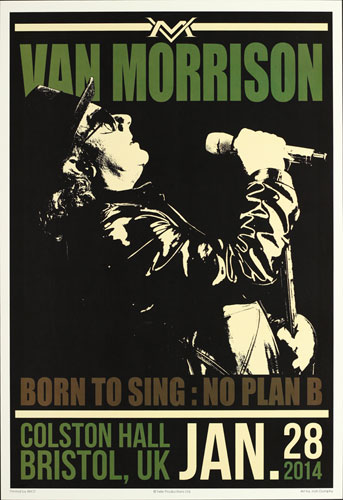
Van Morrison, Born To Sing: No Plan B.


I don't think I will be going out today. It looks like rain is on the way. I have been listening to a Van Morrison album which was released almost exactly ten years ago. This is what I said about it back then. In hindsight I think I was a bit over-enthusiastic......................................
It has been a long  four and a half year wait for Van Morrison's 34th  studio album since Keep It Simple was released on St Patricks Day 2008. That is the longest gap between albums for Van since he arrived in New York to begin his solo career way back in 1967. Apart from Van, Paul Moore on bass is the only musician from Keep It Simple to play on the new album Born To Sing, No Plan B. I must say that it has been worth the wait. As on Veedon Fleece and Astral Weeks Van has managed to capture a mood on Born To Sing and hold it for most of the album. I think on some of Van's previous albums although they contain some great songs they are a bit disjointed in terms of mood, but I find this album very consistent and a valuable addition to Van's fine body of work. The opening track Open The Door (To Your Heart)  is the weakest track on the album, but it is the most radio friendly, so i can understand why it was chosen as the first single from the album. Van's voice sounds wonderful. At 67 years of age the voice is intact. Other singers who have been around as long as Van are shot away vocally. The melody is fine and the arrangement, but what lets the song down badly is the lyrics which are poor by Vans high standards. The lyrics are mainly a string of clichés which are unconnected with each other. Van often takes a song title that he likes, for instance Have I Told You Lately That I Love You and then writes a totally different song to the original. American soul singer Darrell Banks recorded Open The Door To Your Heart in 1966, although Van may be more familiar with the version by Jackie Wilson. In the title Van puts 'To Your Heart' in brackets maybe to stop confusion with the earlier different  song. Although it isn't a great song by any means it does draw the listener in to the mellow groove of the album.
Track two is a vast improvement, Going Down To Monte Carlo which Van informs us is only 25K from Nice. Here he paints an aural sketch of a man escaping from some diabolic pressure, sitting in a restaurant while some awful pseudo jazz plays in the background. Van has used this technique of painting a picture of a moment in time before in songs like Snow In San Anselmo. The protagonist in this quasi-autobiographical song is trying to escape from people who are driving him mad. Those words hark back to Vans Why Must I Always Explain?. Van also mentions Sartre in this song as he did on his previous Blue Note album What’s Wrong With This Picture. Van and Jean Paul go back a long way, back to Tupelo Honey and 'they can't stop up on the road to freedom'. This is a great song of existentialist dread. The listener is rewarded with repeated playing. The jazzy instrumental ending is very nice indeed.
The next song the eponymous Born To Sing is more immediately accessible. Van was born to sing that's for sure, he had no choice. As Leonard Cohen might have said he was born with a golden voice. I think this song could be a contender for the next single from the album. Radio 2 listeners would love this song. The young brass section of Alistair White and Chris White make an outstanding contribution to this album. They have been in Van's band for two years now and considering their youth they seem to have an intuitive feel for where Van wants to go with a song.
End Of The Rainbow is one of the strongest tracks on the album with a world weary Van sadly reflecting on the state of the world to a  lilting jazz accompaniment. Some may say that the lyrics are bleak and miserable but the song reflects the times we live in. There is no gravy train stopping here. I like music director Paul Moran's  piano playing on this song.
I don't know why Van has revisited Close Enough For Jazz. It appeared on the Too Long In Exile album as an instrumental. Maybe Van thought as he was back on the Blue Note jazz label he ought to make the album jazzier. Here he adds vocals. It reminds me of his work with Georgie Fame. It is pleasant enough,  but is one of the lesser tracks on the album. Mystic Of The East is one of my favourite tracks. As you know the word mystic has appeared throughout Vans long career. Mystic Eyes, Into The Mystic, Mystic Avenue etc. The title slightly reminded me of his song Aryan Mist which mentioned gurus from the east and gurus from the west. I didn't like this song as first but it guru on me!. Van is the mystic of the east, East Belfast that is. There is some very nice organ playing on this track. The protagonist is deep in the heart of down. Would that be County Down?. He can't find his brief. Those words also remind one of the Hymns To The Silence album.
Another song that reminds one of an earlier Van song is Retreat And View. Van used those words in Beside You on the Astral Weeks album 'And you roam from your retreat and view'. What does he mean by that?. In 1967 Van spent a short time in a monastery which is a retreat i suppose, and recently Van has spent a long time retreating from the world and now he has reappeared and views the world anew. This is another great track that grows with each playing. The instrumental passages are wonderful. If you like songs such as When The Leaves Come Falling Down then you will love this song after a few plays.

If
In Money We Trust is totally different and is a scathing indictment of the values of modern society. Van quotes Friedrich Nietschze who said God Is dead. Like Sartre, Van also mentioned Nietschze on his previous Blue Note album. I read that Van said he thought of the song when looking at a dollar bill and trying to work out what it all meant. It is certainly a strange thing to have as your god which it certainly is to the bankers and the other beasts with their noses in the trough. Musically the track is quite funky compared to the others.
 I really like Pagan Heart which is the most different of all the songs. I bet Van would have loved to have sung this song with his friend John Lee Hooker. There is great blues guitar and piano on this track. References to Robert Johnson and the crossroads. A really nice blues jam which dies away to a whisper.
The last track is Educating Archie in which Van lets rip with venom against the modern world. Where he sings 'What happened to the individual and what happened to you?' reminds me of an earlier song  'What ever happened to PJ Proby and what ever happened to me? 'Van must have been in a really bad mood when he wrote this one. Educating Archie as you know was a BBC radio show of the 50's featuring a ventriloquist. Van must have listened to it as a kid. In a way i suppose it is the equivalent song to Carry On Regardless on the Magic Time Album. 
In
conclusion,  this is a very satisfying album indeed. I prefer it to the previous work Keep It Simple which although it had a couple of great songs such as Behind The Ritual and the title track, in hindsight was very uneven. This album holds the attention throughout. I know some of the veteran Van fans will say "Its not a patch on Astral Weeks or St Dominic's Preview". Well, that was breakfast, this is dinner. Others will say that its just more of the same, there is nothing new here. Well in a way that is the story of Van's career, he has revisited the same themes and images many times. Monet painted the same water lilies over and over, each time showing different shades of light and dark. Van is the same, he has matured. He has the finest body of work of any solo artist in music and this is an excellent album.

Sunday, October 16, 2022

The Time Has Come by Anne Briggs.

I was listening to Anne Briggs recently because it was her birthday a couple of weeks ago. She is one of my favourite singers, but I only had one album by her which is Anne Briggs, A Collection which was issued on the Topic label. I decided to see what else was available by Anne and had a look on eBay. I found a promotional CD at a very reasonable price of her album The Time Has Come which was originally released in 1971. So, to pass the time on this autumn Sunday afternoon I thought I would write an illustrated little piece about the album. Released on CBS this was her second album, and unlike her earlier Topic recordings which were mainly unaccompanied traditional ballads this album has Anne playing guitar and bouzouki and contains many of her own compositions, such as the opening track Sandman’s Song. Her guitar playing is adequate, she is no Bert Jansch or Richard Thompson, but she sings like a bird. In my humble opinion she has the purist voice of anybody in English folk music. 

The lyrics speak of walking by the sea which is a common theme in many of her songs. She liked to be outdoors close to nature. Ever since Anne Briggs turned her back on the music industry nearly fifty years ago to bring up her children, she has lived in the countryside and worked outdoors at such things as market gardening or for the forestry commission. As she herself has said, she is quite a feral creature. No wonder that Richard Thompson in his song Beeswing which she inspired said, ‘Brown hair zigzagged around her face, and a look of half-surprise, like a fox caught in the headlights, there was animal in her eyes’. In an interview with Uncut magazine, she said that as a child she wanted to be Mowgli from Kipling’s Jungle Book. Highlodge Hare is a lively instrumental which Anne plays on the bouzouki.

She learned to play this instrument from her boyfriend of the time Johnny Moynihan who was the man who introduced the bouzouki to Irish folk music. Although Anne loved singing, she hated performing to large audiences. What she enjoyed doing was busking around the west of Ireland in the summertime which she did for several years in the 1960’s, and even lived on a beach in Ireland in 1967. Anne’s mother came from Ireland which is probably why she felt so at home there. Fire and Wine was written by Steve Ashley. It was with his short-lived band called Ragged Robin that Anne recorded her final album Sing A Song For You in 1973. She was so unhappy with her performance on that record she stopped its release until 1996 and never returned to a recording studio again. I have heard some of those songs and I think she was being too hard on herself because the songs are excellent.  Step Right Up was written by the late great Henry McCullough. Anne would have known Henry because before he found fame in Joe Cocker’s band, and later Wings with Paul McCartney Henry was in an Irish group called Sweeney’s Men with Johnny Moynihan. Incidentally, my brother Paul knew Henry & Johnny because they both played in his pub in County Mayo. 

Ride, Ride, is an anglicised version of an American song called Railroad Bill which many people have recorded. The title track The Time Has Come is my favourite song on the album. It has a sad timeless appeal which will still sound as good in a hundred years’ time. The autumnal lyrics perfectly suit this time of year and seem quite prophetic, ‘Don't you think of me no more, I'm going to some foreign shore’. She liked to be by the sea. Clea Caught A Rabbit was written by a man called Stan Ellison from Manchester and is another upbeat bouzouki tune. Anne had a lurcher dog called Clea in those days who is actually on the cover of her first album. The lyrics of Tangled Man reminds me slightly of Cello Song a song by Nick Drake, but I’m not sure if Anne was influenced by him or vice-versa, or neither. Wishing Well is another stand out haunting song which she wrote with her life-long friend Bert Jansch. They were a huge influence on each other and shared many songs. 

Standing On The Shore is another song which shows her love of the sea. She would have learned this song from Johnny Moynihan who did the arrangements with Terry Woods who was another of Sweeney’s Men and would play with The Pogues many years later. Anne plays bouzouki again on Tidewave which is a song about friends and long summers which have to come to an end. Everytime is a sad song about the end of a relationship. Fine Horseman is a magnificent song to finish the album. It was written by her close friend Lal Waterson who included it on the legendary album Bright Phoebus which I wrote about some time ago. I have enjoyed listening to this album again today. If you want to hear the title track, I have shared it below. I think you will agree with me that Anne Briggs is a wonderful singer. Also, I have shared a rare and excellent radio interview with her from 2016 if you want to hear that. Cheers.

Johnny Moynihan & Anne Briggs at Puck Fair, Kilorglin, Co Kerry 1967. 


Popular Posts